


Dive into the thrilling world of sharks at the Royal Ontario Museum! This immersive exhibition takes visitors on a journey from the enormous prehistoric Megalodon to the tiny, bioluminescent Dwarf Lanternshark, showcasing the incredible diversity and evolution of these ancient predators. Discover how sharks have adapted over hundreds of millions of years, developing unique senses, remarkable hunting strategies, and surprising ways to survive in a variety of habitats from deep oceans to freshwater rivers.
The exhibit is designed to be both educational and engaging, featuring life-sized models, real specimens, and interactive displays that bring the science of sharks to life. Learn about their critical role in maintaining healthy marine ecosystems, the conservation challenges they face today, and the fascinating biology that makes them such effective hunters. Perfect for families, students, and anyone fascinated by the natural world, this exhibition turns fear into curiosity and awe.
Sharks have intrigued humans for as long as we have explored the oceans. The terrifying monster from the movie Jaws is what many might imagine when they think of these animals, but they are far more fascinating and complex than their depiction in popular culture. Did you know, for example, that there is a shark that eats seagrass? Or that some sharks can sense Earth's magnetic field?
Presented by Desjardins Financial Group, this family-friendly exhibition invites you to uncover fresh perspectives, groundbreaking research, and the astounding diversity of this ancient group of fishes.
Visitors will delve into the anatomy, behaviour, and history of sharks, from familiar favourites like tiger sharks and great whites to lesser-known species like the dwarf lanternshark—a tiny, light-producing marvel small enough to hold in your hand.
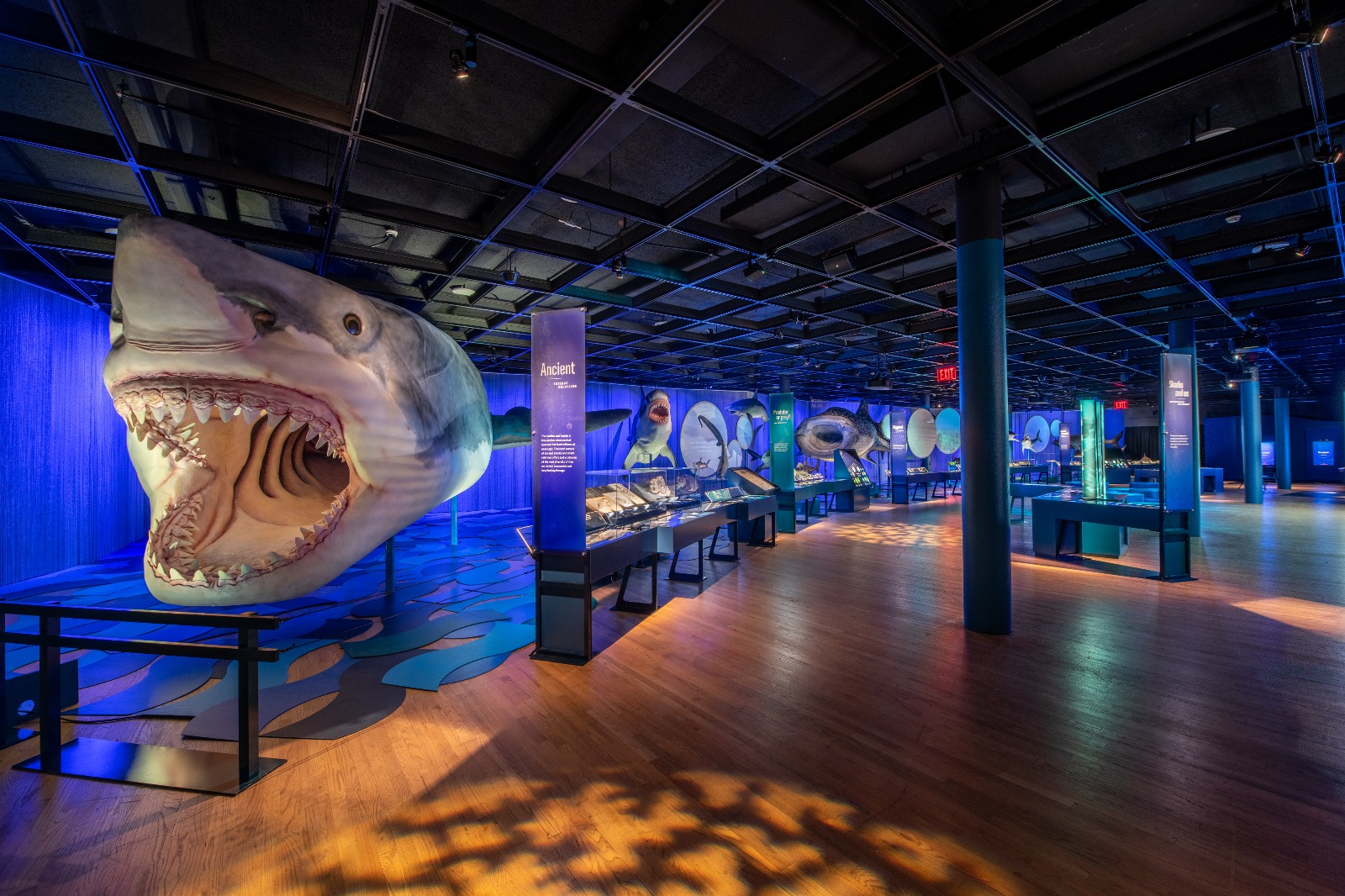
Through dozens of interactives and life-sized models, including a life-size head of the huge extinct Megalodon, join us for a unique look at these magnificent creatures, their habitats, hunting techniques, and the conservation threats that they face.
Check out this article next